통합 검색
통합 검색
LengtheningㅣCorrection
Gangnam Champion Orthopedic Surgery
Hospital
- Limb Lengthening & Correction
- Spine & Joint
- Hand & Foot
- Rehabilitation
Height Reduction
Surgery
in Korea
Height Shortening
Femoral Shortening
Limb Shortening Surgery
Can You Surgically Become Shorter?
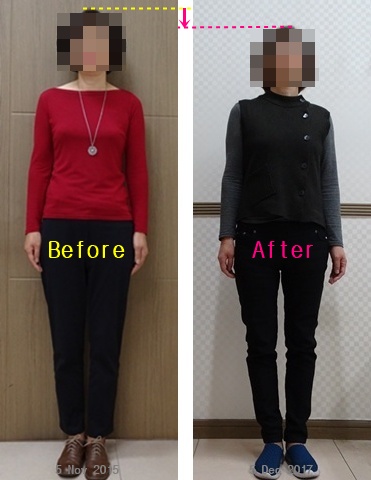
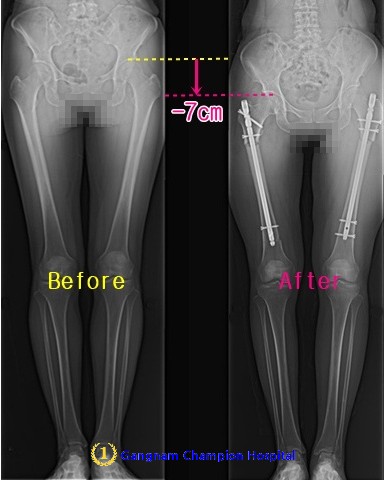
Yes. In skeletally mature adults, standing height can be reduced by surgically shortening the bones of the lower limbs.
This procedure is commonly described by patients as height reduction surgery or height shortening surgery. In orthopedic terminology, the procedure may be described as limb shortening surgery, femoral shortening, tibial shortening, or bone shortening osteotomy, depending on the bone and technique involved.
Height reduction surgery is fundamentally different from limb lengthening.
In limb lengthening, a bone is gradually distracted to increase its length.
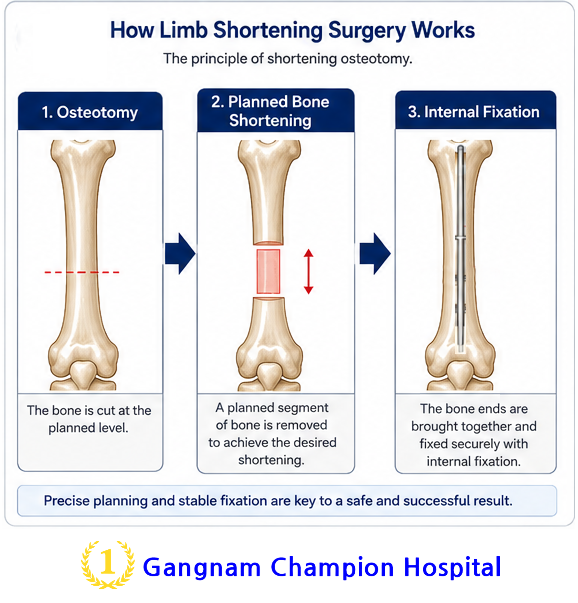
In limb shortening, a carefully calculated segment of bone is removed, the remaining bone segments are brought together, and stable fixation is used while the bone heals.
At Gangnam Champion Hospital in Seoul, South Korea, height reduction is evaluated from an orthopedic perspective that considers not only the desired decrease in height but also body proportion, femur and tibia length, muscle condition, lower-limb alignment, joint function, and long-term mobility.
Height reduction is major orthopedic surgery. The amount of shortening and the appropriate surgical method must therefore be individually determined rather than selected solely according to a desired number of centimeters.

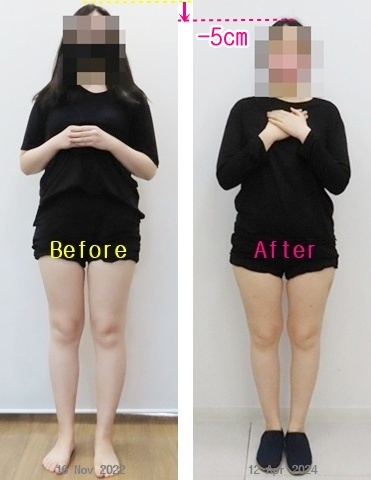
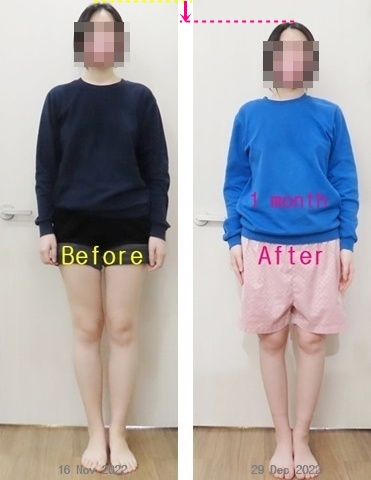
1. What Is Height Reduction Surgery?
Height reduction surgery is an orthopedic procedure that reduces the length of one or more long bones of the lower extremities.
For an adult who has completed skeletal growth, this generally requires a shortening osteotomy.
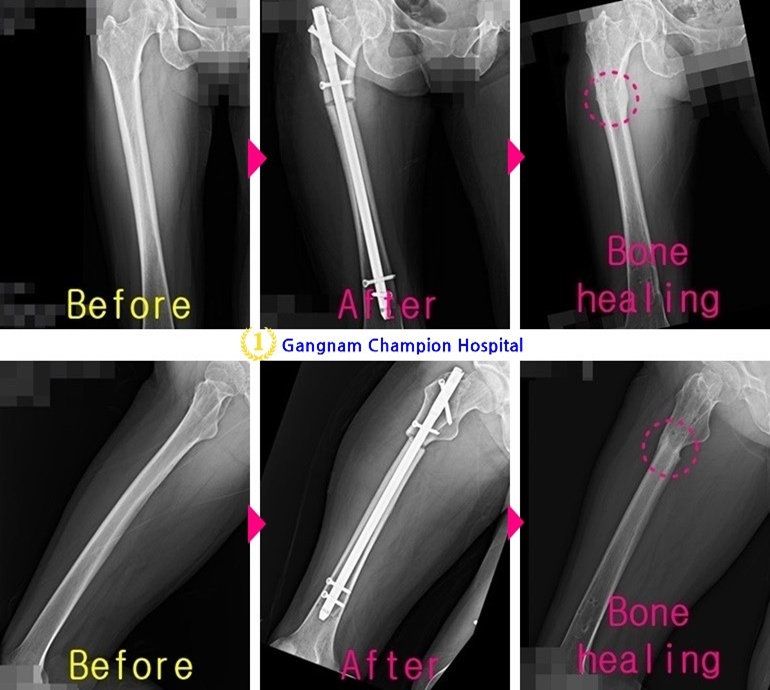
A predetermined segment of bone is removed, the remaining bone ends are brought together, alignment and rotation are carefully checked, and the bone is stabilized with internal fixation.
Depending on the patient's anatomy and treatment plan, shortening may involve the:
✔ Femur (thigh bone)
✔ Tibia (shin bone)
✔ Femur and tibia in selected circumstances
The procedure may reduce standing height, but the objective should not simply be to remove as much bone as possible.
The amount of shortening must remain compatible with bone healing, muscle function, joint motion, gait, and overall body proportions.
2. Height Reduction Surgery vs. Limb Shortening Surgery
Patients use several different terms when searching for this procedure.
Common terms include:
✔ Height Reduction Surgery
✔ Height Shortening Surgery
✔ Limb Shortening Surgery
✔ Leg Shortening Surgery
✔ Femoral Shortening
✔ Femur Shortening Surgery
✔ Tibial Shortening
✔ Bone Shortening Surgery
✔ Shortening Osteotomy
These terms overlap but are not completely identical.
Height reduction surgery describes the patient's goal: reducing overall standing height.
Limb shortening surgery describes the orthopedic principle: reducing the length of a limb bone.
Femoral shortening specifically refers to shortening the thigh bone.
Tibial shortening specifically refers to shortening the shin bone.
A consultation should therefore begin with the patient's goals but ultimately determine which orthopedic procedure, if any, is appropriate.
3. Who May Consider Height Reduction Surgery?
Height reduction surgery may be evaluated in skeletally mature patients with concerns related to:
✔ Excessive overall height
✔ Disproportionately long legs
✔ Long femurs relative to the torso
✔ Long lower limbs relative to overall body proportions
✔ Limb-length abnormalities
✔ Skeletal overgrowth
✔ Significant concerns regarding height or body proportion
However, being tall alone does not automatically make someone an appropriate candidate.
Evaluation should consider both physical and psychological readiness for a major orthopedic operation and prolonged rehabilitation.
4. Who May Not Be an Appropriate Candidate?
Surgery may not be appropriate when the risks of shortening outweigh the expected benefit.
Factors requiring careful consideration may include:
✔ Incomplete skeletal maturity
✔ Significant medical conditions affecting surgery
✔ Poor bone quality
✔ Active infection
✔ Significant vascular disease
✔ Certain neurological disorders
✔ Severe joint disease
✔ Unrealistic expectations regarding the amount of shortening
✔ Inability to participate in rehabilitation
✔ Expectations that surgery will solve unrelated social or psychological difficulties
A comprehensive medical assessment is necessary before surgical planning.
5. Why Body Proportion Matters
Height is only one measurement.
Two people who are both 180 cm tall can have very different body proportions.
One may have relatively long legs and a shorter torso, while another may have a longer torso and average-length legs.
Therefore, height reduction planning may include measurements such as:
✔ Standing height
✔ Sitting height
✔ Arm span
✔ Femur length
✔ Tibia length
✔ Total lower-limb length
✔ Upper-to-lower body ratio
✔ Femur-to-tibia ratio
✔ Left-to-right symmetry
✔ Mechanical axis of the legs
The goal is not simply to achieve a lower number on a height measurement.
The resulting body proportions and limb function should also be considered.
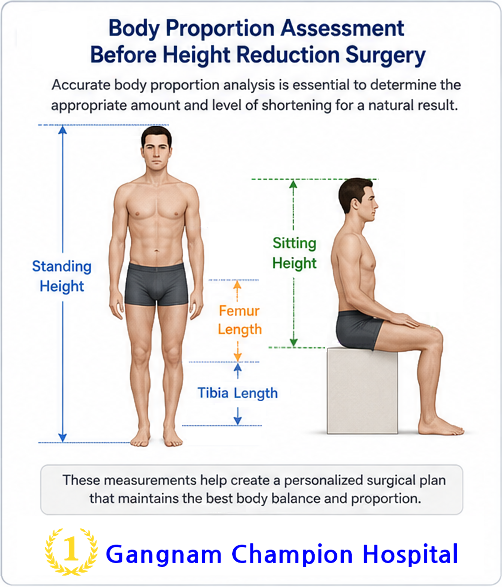
6. Where Does Height Come From?
Standing height is determined by multiple anatomical structures, including:
✔ Head and neck
✔ Spine
✔ Pelvis
✔ Femur
✔ Tibia
✔ Foot
Height reduction surgery generally focuses on the long bones of the lower limbs because these bones can be surgically shortened through established orthopedic osteotomy techniques.
However, shortening a lower-limb bone also changes the relationship between:
✔ Legs and torso
✔ Femur and tibia
✔ Muscle length and bone length
✔ Hip, knee, and ankle mechanics
This is why detailed proportional planning is important.
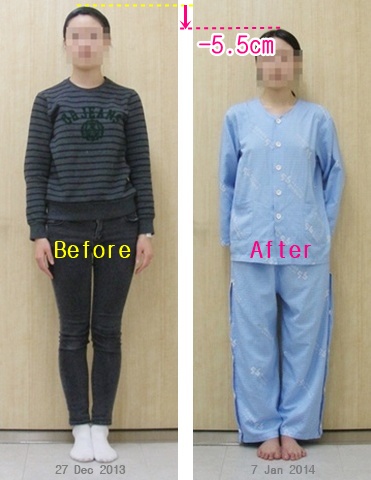
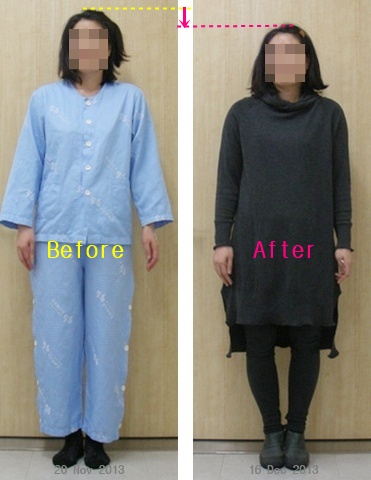
7. Femoral Shortening Surgery
The femur is the long bone between the hip and knee.
Femoral shortening may be considered when the thigh segment is suitable for shortening based on the patient's anatomy and overall proportions.
During surgery:
✔ The planned shortening amount is confirmed.
✔ An osteotomy is performed.
✔ A predetermined segment of femoral bone is removed.
✔ The remaining bone segments are brought together.
✔ Rotation and alignment are checked.
✔ Internal fixation is applied.
✔ Bone healing is monitored during recovery.
The fixation method depends on the surgical plan and individual anatomy.
8. Why Is the Femur Often Considered for Shortening?
The femur is the longest bone in the human body and represents a substantial portion of lower-limb length.
For some patients, femoral shortening may provide an appropriate balance between desired height reduction and preservation of lower-limb proportions.
However, femoral shortening also changes the relationship between the bone and surrounding muscles.
Potential effects on:
✔ Quadriceps
✔ Hamstrings
✔ Hip muscles
✔ Knee motion
✔ Muscle tension
✔ Gait
must therefore be considered.
Femoral shortening is not automatically the correct operation for every patient.
9. Tibial Shortening Surgery
The tibia extends from the knee to the ankle.
Tibial shortening may be considered in selected patients when the lower-leg segment is disproportionately long or when the overall treatment plan indicates that tibial correction is appropriate.
Planning must consider:
✔ Tibial length
✔ Femur-to-tibia proportion
✔ Knee alignment
✔ Ankle alignment
✔ Muscle and tendon tension
✔ Nerve and vascular anatomy
✔ Desired amount of shortening
Tibial shortening and femoral shortening have different anatomical and biomechanical considerations.
They should not be viewed simply as interchangeable ways of removing the same number of centimeters.
10. Femur vs. Tibia: Which Should Be Shortened?
This is one of the most important questions in height reduction surgery.
There is no universal answer.
Femoral shortening may be considered when:
✔ The femur is relatively long
✔ Thigh-to-lower-leg proportion allows shortening
✔ The desired reduction is compatible with femoral anatomy
✔ Hip and knee function are suitable
Tibial shortening may be considered when:
✔ The tibia is disproportionately long
✔ Lower-leg proportion supports shortening
✔ Knee and ankle alignment are appropriate
✔ Soft-tissue and neurovascular considerations permit the procedure
The decision should be based on measurements and imaging rather than preference alone.
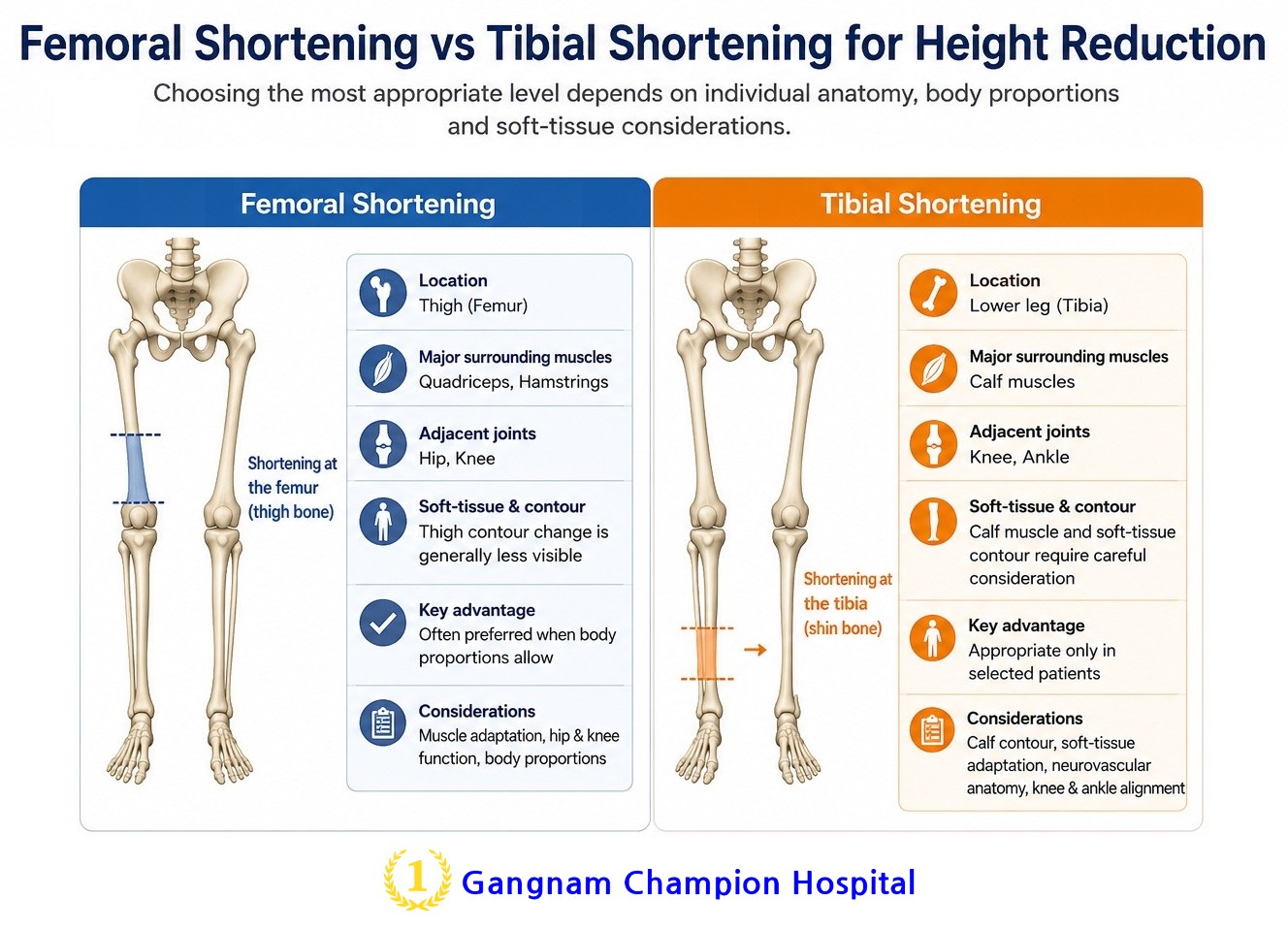
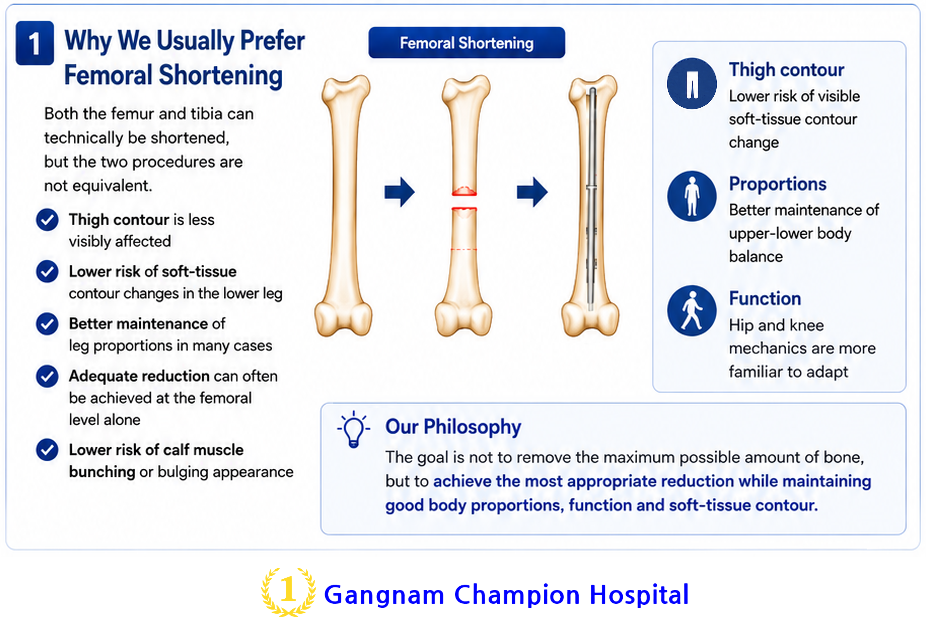
11. Why Femoral Shortening May Be Preferred Over Tibial Shortening
Both the femur and tibia can technically be shortened. However, the two procedures are not equivalent from a soft-tissue and cosmetic perspective.
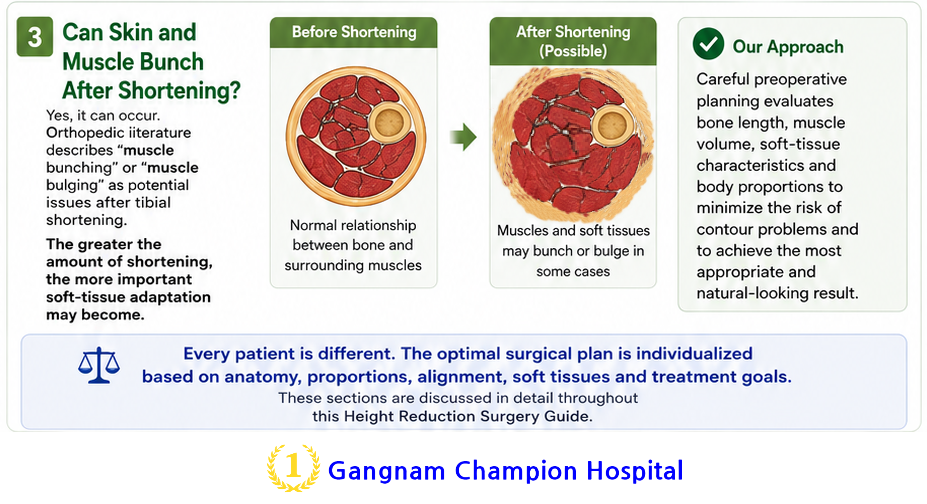
Acute shortening of the tibia changes the relationship between the tibial bone and the surrounding calf muscles, fascia, skin and other soft tissues. Orthopedic literature has reported muscle bunching or weakness among the potential problems associated with tibial shortening.
Because the calf has a relatively visible soft-tissue contour, substantial tibial shortening may also alter the shape of the lower leg in some patients. The amount of shortening, original calf circumference, muscle volume, skin elasticity and individual anatomy may all influence the postoperative contour.
For these reasons, femoral shortening may be preferred when the patient's body proportions and anatomy allow the desired height reduction to be achieved through the femur.
Tibial shortening is not necessarily contraindicated. Published clinical series have shown that selected patients can recover good function after tibial shortening. However, careful patient selection and conservative shortening are particularly important when cosmetic lower-leg contour is a concern.
The choice between femoral and tibial shortening should therefore be based not only on the number of centimeters to be reduced, but also on body proportion, muscle volume, calf contour, soft-tissue adaptation, lower-limb alignment and long-term function.
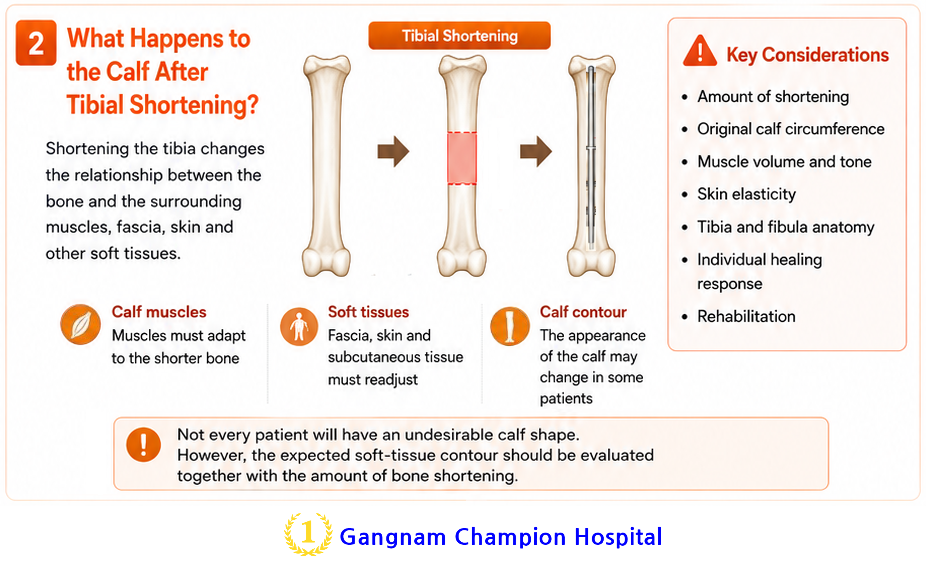
12. What Happens to the Calf After Tibial Shortening?
Tibial shortening reduces the length of the underlying bone, but the surrounding calf muscles, fascia, skin and subcutaneous tissues must adapt to the new skeletal length.
This soft-tissue response is particularly important in the lower leg because the shape of the calf is strongly influenced by muscle volume and the relationship between the muscles and the tibia and fibula.
After substantial shortening, the postoperative calf contour may therefore differ from its preoperative appearance. The degree of change may depend on the amount of shortening, original calf circumference, muscle volume and tone, skin elasticity, subcutaneous tissue and individual anatomy.
This does not mean that every patient undergoing tibial shortening will develop an undesirable calf shape. However, when height reduction is being considered partly for aesthetic or body-proportion reasons, the expected soft-tissue contour should be evaluated together with the amount of bone shortening.
13. Can Skin and Muscle Bunch After Tibial Shortening?
Muscle bunching or bulging can occur after acute tibial shortening.
When the tibia is shortened, the length of the bone changes immediately, while the surrounding muscles and soft-tissue envelope must adapt to the shorter skeletal structure.
Orthopedic literature has described muscle bunching or muscle weakness as potential issues associated with tibial shortening.
The clinical and cosmetic significance can vary considerably between patients. Factors such as the amount of shortening, muscle volume, calf circumference, skin and soft-tissue characteristics, and rehabilitation may influence the postoperative result.
In general, the greater the amount of acute shortening, the more important careful assessment of soft-tissue adaptation becomes.
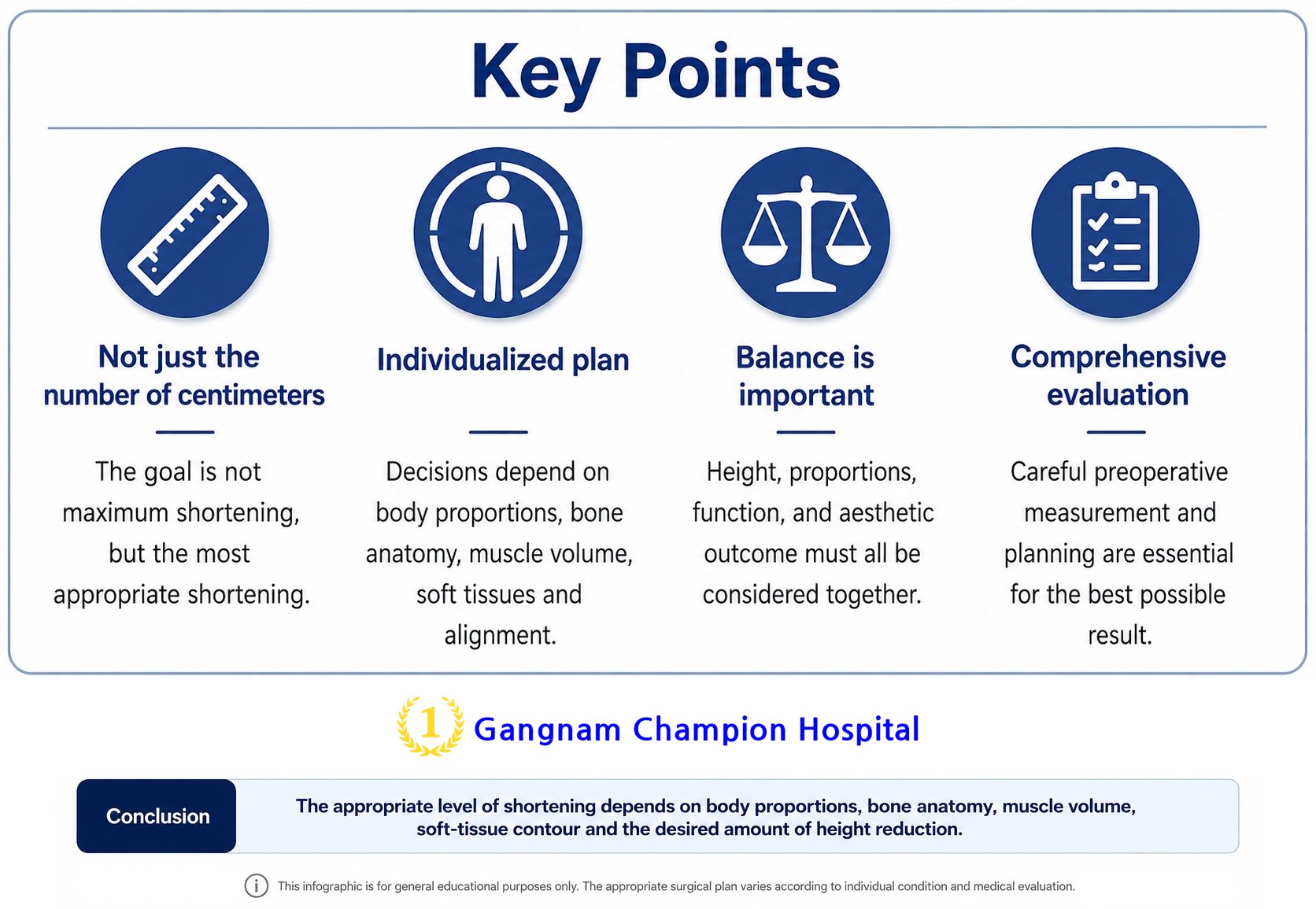
This is one reason why the surgical plan for height reduction should not be based solely on achieving the maximum possible reduction in centimeters.
14. Can Both the Femur and Tibia Be Shortened?
In selected circumstances, staged shortening at more than one bone level may be considered.
However, this substantially increases the complexity of treatment.
Shortening both femur and tibia changes:
✔ Overall leg length
✔ Femur-to-tibia ratio
✔ Muscle tension
✔ Gait mechanics
✔ Rehabilitation requirements
✔ Surgical exposure and cumulative risk
Therefore, a larger desired height reduction does not automatically mean that multiple bones should be shortened.
The potential benefit must be weighed against the additional surgical and functional risks.
15. How Many Centimeters Can Height Be Reduced?
This is one of the most common questions from international patients.
There is no universal number that is safe or appropriate for every person.
The possible amount depends on:
✔ Original height
✔ Femur length
✔ Tibia length
✔ Leg-to-torso ratio
✔ Muscle mass
✔ Soft-tissue flexibility
✔ Joint condition
✔ Nerve and vascular anatomy
✔ Bone quality
✔ Planned surgical level
✔ Overall health
✔ Functional requirements
Published orthopedic literature describes substantial shortening for specific medical indications, but these figures should not be interpreted as automatic cosmetic targets.
The appropriate amount should be determined individually after examination and radiographic measurement.
More shortening is not necessarily better.
16. Why Excessive Shortening Can Be a Problem
Removing too much bone can affect the relationship between the skeleton and surrounding soft tissues.
Potential concerns include:
✔ Excessive muscle tension or redundancy
✔ Muscle weakness
✔ Reduced joint motion
✔ Changes in gait
✔ Altered body proportions
✔ Nerve problems
✔ Functional limitations
✔ Difficulty with rehabilitation
The planned reduction should therefore balance the desired height change with preservation of function.
17. What Will My Body Proportions Look Like After Surgery?
This should be considered before surgery rather than after it.
Height reduction changes the ratio between the legs and upper body.
Preoperative planning may compare:
Before surgery
✔ Standing height
✔ Sitting height
✔ Leg length
✔ Femur length
✔ Tibia length
✔ Arm span
with the predicted measurements after shortening.
For some patients with disproportionately long legs, shortening may result in a different leg-to-torso proportion.
For others, excessive shortening could create an undesirable disproportion.
Individual planning is therefore essential.
18. Will My Arms Look Too Long After Height Reduction?
Arm length does not change when the legs are shortened.
Therefore, the relationship between arm span and standing height may change after surgery.
Whether this difference is noticeable depends on:
✔ Original arm span
✔ Original height
✔ Amount of shortening
✔ Torso length
✔ Shoulder width
✔ Overall body proportions
Arm span should therefore be considered as part of preoperative proportional assessment.
19. Will My Legs Look Too Short After Surgery?
This depends primarily on the original proportions and the amount of shortening.
A patient with relatively long legs may tolerate a different amount of shortening than a patient whose legs are already relatively short compared with the torso.
This is another reason why the same number of centimeters should not be recommended to every patient.
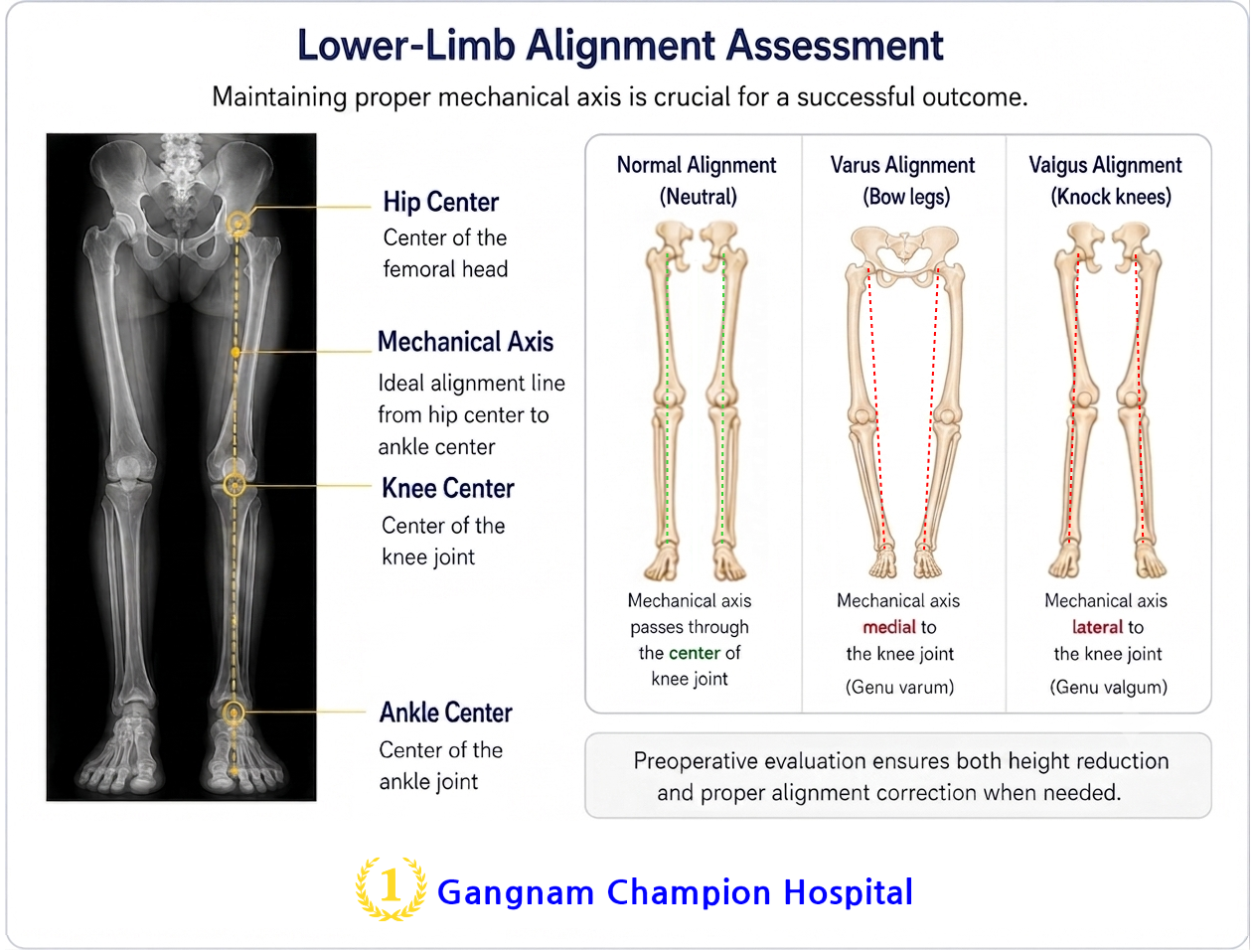
20. Height Reduction & Lower-Limb Alignment
Length is only one part of lower-limb anatomy.
Patients should also be evaluated for:
✔ Bow legs
✔ Genu varum
✔ Knock knees
✔ Genu valgum
✔ Rotational deformity
✔ Mechanical-axis abnormalities
✔ Leg-length discrepancy
When a patient has both length and alignment concerns, the entire lower extremity should be analyzed before determining the surgical strategy.
21. Can Height Reduction Surgery Correct Bow Legs or Knock Knees?
A standard shortening osteotomy is intended primarily to reduce bone length.
A corrective osteotomy is intended primarily to change alignment.
In selected patients, surgical planning may need to consider both length and alignment.
However, whether these goals can appropriately be combined depends on:
✔ Location of the deformity
✔ Degree of angulation
✔ Rotation
✔ Mechanical axis
✔ Bone length
✔ Joint orientation
✔ Required shortening
A full-length standing X-ray is particularly useful in these cases.
22. Height Reduction for Adults vs. Growth Modulation for Adolescents
Adult height reduction and adolescent growth modulation are fundamentally different treatments.
Skeletally Mature Adult
Existing bone must be physically shortened to reduce limb length.
Growing Adolescent
If substantial growth remains, epiphysiodesis may sometimes be considered to limit additional growth at selected growth plates.
The distinction is important because epiphysiodesis does not remove several centimeters from an already grown leg.
It modifies future growth.
23. What Is Epiphysiodesis?
Epiphysiodesis is an orthopedic procedure used to stop or modify growth at a selected growth plate.
It has traditionally been used to manage certain limb-length discrepancies and growth-related deformities.
In selected growing patients, the principle may be used to reduce the amount of remaining lower-limb growth.
Successful planning depends heavily on timing.
24. How Is Remaining Growth Estimated?
Assessment may include:
✔ Chronological age
✔ Bone age
✔ Current height
✔ Previous height measurements
✔ Growth velocity
✔ Pubertal development
✔ Parental height
✔ Skeletal maturity
✔ Growth plate appearance
✔ Predicted adult height
Growth prediction is an estimate.
No method can predict final adult height with absolute precision.
Therefore, patients and families should understand the possibility of under- or over-correction when growth modulation is considered.
25. Epiphysiodesis vs. Adult Limb Shortening
These procedures should not be confused.
| Epiphysiodesis | Limb Shortening | |
| Patient | Growing adolescent | Skeletally mature patient |
| Principle | Limits future growth | Removes existing bone length |
Immediate shortening | No | Yes |
Depends on remaining growth | Yes | No |
Osteotomy required | Technique-dependent | Yes for structural shortening |
| Goal | Modify future final length | Reduce existing limb length |
The appropriate approach depends primarily on skeletal maturity and the treatment objective.
26. Preoperative Evaluation
A comprehensive evaluation may include:
Medical Evaluation
✔ Medical history
✔ Current medications
✔ Previous surgery
✔ Previous fractures
✔ Neurological history
✔ Vascular history
✔ Smoking status
✔ General health assessment
Physical Examination
✔ Standing height
✔ Sitting height
✔ Arm span
✔ Hip range of motion
✔ Knee range of motion
✔ Ankle range of motion
✔ Muscle strength
✔ Gait
✔ Limb alignment
Radiographic Evaluation
✔ Full-length standing lower-limb X-rays
✔ Femur measurements
✔ Tibia measurements
✔ Mechanical-axis analysis
✔ Joint orientation
✔ Bone quality
✔ Growth plates when relevant
Additional examinations may be required depending on the patient.
27. Planning the Target Height
Patients often begin consultation by saying:
“I want to become 5 cm shorter.”
The orthopedic planning process should ask a different question:
“How much shortening is appropriate for this patient's anatomy while preserving acceptable proportion and function?”
The desired height is important, but it is only one factor.
Planning should consider:
✔ Desired height
✔ Anatomically reasonable shortening
✔ Body proportions after shortening
✔ Muscle adaptation
✔ Bone healing
✔ Joint function
✔ Gait
✔ Long-term expectations
The final surgical plan may therefore differ from the patient's initial requested number.
Detailed Height Reduction Surgery Information
Would you like to learn more about height reduction surgery, femoral shortening, limb shortening techniques, surgical planning, recovery, rehabilitation, and international patient care?
Visit our detailed Height Reduction Surgery information page for additional information about the surgical process, treatment planning, recovery, and frequently asked questions.
28. How Is Limb Shortening Surgery Performed?
Although surgical techniques vary, the basic principles generally include:
Step 1 — Preoperative Measurement
The planned shortening amount and osteotomy location are determined.
Step 2 — Osteotomy
The selected bone is surgically divided.
Step 3 — Bone Shortening
A predetermined amount of bone is removed or the bone segments are shortened according to the surgical technique.
Step 4 — Alignment
The remaining bone segments are brought together.
Length, rotation, and alignment are checked.
Step 5 — Internal Fixation
The bone is stabilized using an appropriate fixation method.
Step 6 — Imaging Confirmation
Alignment and fixation are confirmed.
Step 7 — Rehabilitation
Joint movement, muscle function, mobility, and eventual weight bearing are progressively restored.
29. Internal Fixation
Internal fixation is used to maintain stability while the shortened bone heals.
Depending on the bone and surgical technique, fixation may involve:
✔ Intramedullary nail(m/c)
✔ Plate and screws
✔ Other orthopedic fixation systems
The choice depends on:
✔ Bone anatomy
✔ Osteotomy location
✔ Shortening amount
✔ Bone quality
✔ Desired stability
✔ Surgeon assessment
There is no single fixation method appropriate for every patient.
30. Does Height Reduction Require an External Fixator?
No. A shortening osteotomy can often be stabilized using internal fixation, depending on the procedure.
This differs from many traditional limb-lengthening techniques that may use external fixation or specialized lengthening devices.
The appropriate fixation method should be determined according to the individual surgical plan.
31. Anesthesia
Height reduction surgery is major orthopedic surgery.
Depending on the procedure and patient's medical condition, anesthesia may involve:
✔ Regional anesthesia
✔ Sedation
✔ An appropriate combination
Anesthesia should be individually planned after preoperative medical and anesthesiologic assessment.
32. Immediately After Surgery
During the early postoperative period, management may focus on:
✔ Pain control
✔ Swelling management
✔ Wound care
✔ Circulation
✔ Nerve function
✔ Prevention of blood clots
✔ Early joint motion when appropriate
✔ Safe transfers and mobility
The exact protocol depends on the operation and fixation.
33. Walking After Height Reduction Surgery
Patients should not assume that normal walking will be possible immediately after surgery.
Weight-bearing status depends on:
✔ Bone shortened
✔ Osteotomy technique
✔ Fixation stability
✔ Bone quality
✔ Amount of shortening
✔ Healing progress
Mobility aids may include:
✔ Walker
✔ Crutches
✔ Wheelchair during selected stages
Weight bearing is gradually advanced according to clinical and radiographic healing.
34. Rehabilitation After Limb Shortening
Rehabilitation is an essential part of height reduction surgery.
Therapy may focus on:
✔ Hip motion
✔ Knee motion
✔ Ankle motion
✔ Muscle stretching
✔ Muscle strengthening
✔ Gait training
✔ Balance
✔ Progressive weight bearing
The rehabilitation plan changes as bone healing progresses.
35. Bone Healing
After shortening, the two bone surfaces must unite.
Healing is monitored with follow-up imaging.
Factors affecting bone healing include:
✔ Age
✔ Bone quality
✔ Smoking
✔ Nutrition
✔ Medical conditions
✔ Fixation stability
✔ Osteotomy technique
✔ Activity level
✔ Individual biological healing
Patients should not return to unrestricted activity based on time alone.
Radiographic evidence of healing is important.
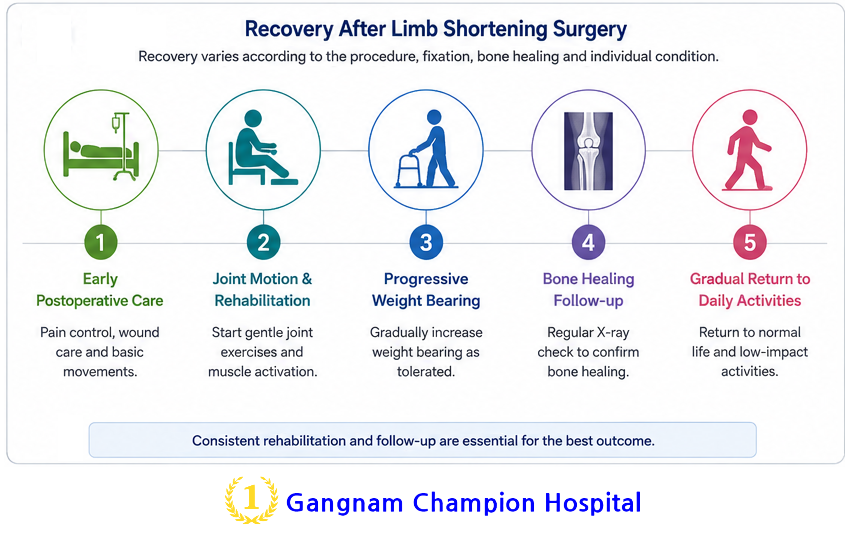
36. When Can I Return to Daily Life?
There is no universal recovery schedule.
Return to activities depends on:
✔ Type of surgery
✔ Amount of shortening
✔ Fixation
✔ Pain
✔ Muscle recovery
✔ Walking ability
✔ Bone healing
✔ Type of work
Desk work and remote work may be possible earlier than occupations requiring prolonged standing, walking, lifting, or physical activity.
37. When Can I Drive?
Driving requires adequate:
✔ Strength
✔ Reaction time
✔ Joint motion
✔ Weight-bearing ability
✔ Control of the operated limb
Patients should not drive while their ability to safely control a vehicle is impaired or while taking medications that interfere with driving.
Clearance should be individualized.
38. When Can I Exercise Again?
Exercise is progressively resumed.
The sequence may include:
✔ Early rehabilitation exercises
✔ Progressive strengthening
✔ Walking
✔ Low-impact exercise
✔ More demanding activities after adequate healing
Running, jumping, and high-impact sports generally require more advanced bone healing and functional recovery.
39. What Happens to the Muscles When the Bone Is Shortened?
Bone shortening changes the relationship between bone length and the surrounding soft tissues.
The muscles do not instantly adapt to the new skeletal length.
Possible temporary effects include:
✔ Muscle weakness
✔ Altered tension
✔ Reduced range of motion
✔ Changes in gait
Rehabilitation helps the muscles adapt to the new limb length.
This is one reason why excessive shortening can be problematic.
40. Will My Walking Change?
Temporary gait changes are expected during recovery.
The long-term objective is functional walking after bone healing and rehabilitation.
Factors that may influence gait include:
✔ Amount of shortening
✔ Muscle strength
✔ Hip and knee motion
✔ Lower-limb alignment
✔ Pain
✔ Preoperative gait
✔ Rehabilitation
Gait should therefore be considered both before and after surgery.
41. Possible Risks & Complications
All major orthopedic procedures involve risk.
Potential complications of limb shortening may include:
✔ Infection
✔ Deep vein thrombosis
✔ Nonunion
✔ Fracture
✔ Implant failure
✔ Genu Varum
✔ Thick Legs
✔ Nerve & Vascular injury
✔ Muscle weakness
✔ Reduced range of motion
✔ Gait abnormalities
✔ Limb-length asymmetry
Individual risk varies according to the patient and procedure.
42. Will the Metal Implant Need to Be Removed?
Whether an intramedullary nail, plate, or screws should later be removed depends on:
✔ Bone healing
✔ Implant symptoms
✔ Implant location
✔ Patient preference
✔ Future orthopedic considerations
✔ Surgeon recommendation
If removal is planned, it is generally considered only after adequate bone healing.
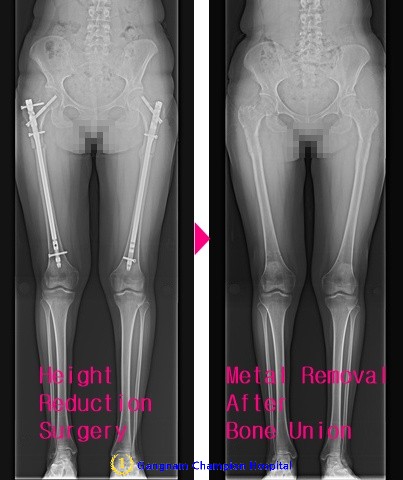
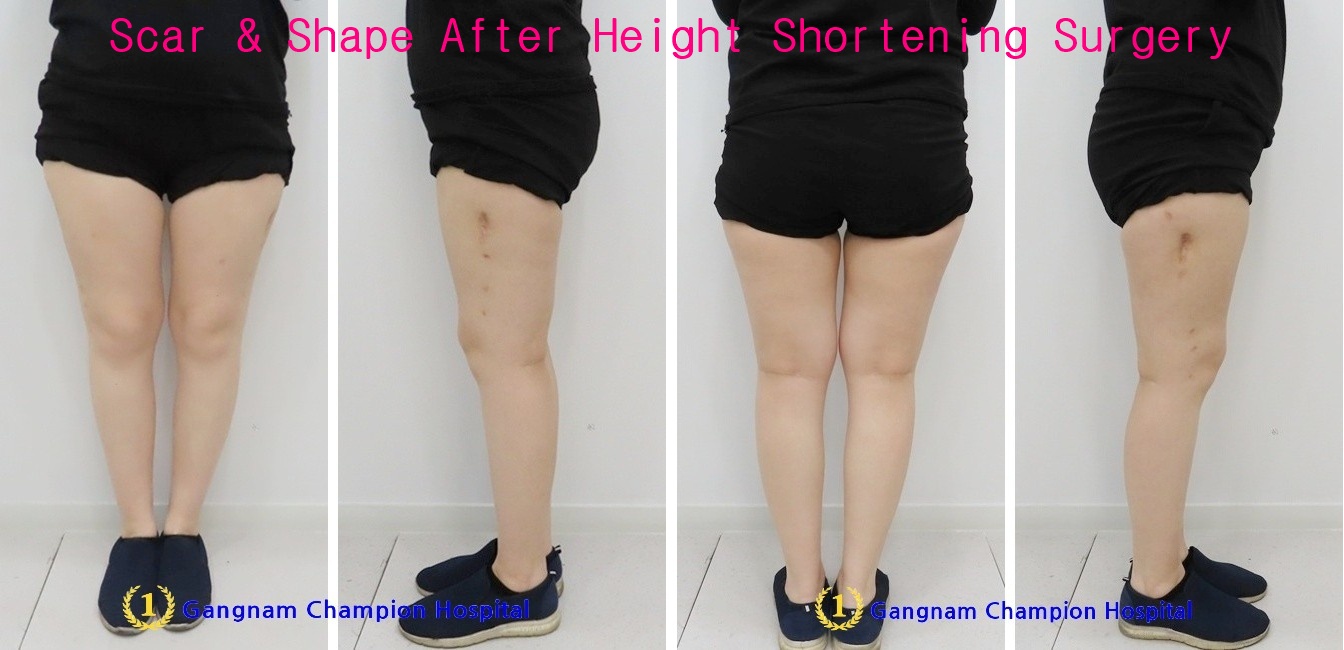
43. Scars After Height Reduction Surgery
Any orthopedic surgery involving an incision leaves a scar.
Scar size and location depend on:
✔ Surgical approach
✔ Fixation method
✔ Osteotomy location
✔ Individual healing characteristics
Scars generally mature over time, but an invisible scar cannot be guaranteed.
44. Revision Height Reduction Surgery
Revision surgery may occasionally be required for complications such as:
✔ Nonunion
✔ Malalignment
✔ Implant failure
✔ Significant residual asymmetry
✔ Other postoperative problems
Revision procedures are usually more complex than primary surgery.
Prevention through careful planning, appropriate fixation, and postoperative follow-up is therefore important.
45. Height Reduction vs. Limb Lengthening
Although both procedures involve osteotomy, their principles are very different.
Height Reduction
Bone length is removed and the remaining segments are brought together.
Limb Lengthening
The bone is divided and gradually distracted so new bone forms in the gap.
Height reduction therefore generally does not require a prolonged distraction phase.
However, shortening still requires bone healing and rehabilitation and should not be considered a minor operation.
46. Can Previous Limb Lengthening Be Reversed?
Patients who previously underwent limb lengthening may occasionally ask whether their legs can later be shortened.
This requires highly individualized evaluation.
Important factors include:
✔ Original bone anatomy
✔ Amount previously lengthened
✔ Current bone quality
✔ Existing implants
✔ Joint motion
✔ Muscle condition
✔ Nerve function
✔ Alignment
✔ Previous complications
Previous lengthening does not automatically mean that shortening is appropriate or straightforward.
47. Height Reduction & Limb-Length Discrepancy
Bone shortening has established orthopedic applications in the treatment of selected patients with limb-length discrepancy, where one limb is significantly longer than the other.
The principles of osteotomy, shortening, alignment, fixation, and bone healing used in limb shortening are therefore part of orthopedic reconstructive surgery.
However, bilateral height reduction for overall stature presents different goals and planning considerations from correcting a unilateral limb-length discrepancy.
48. Psychological Readiness & Expectations
Height can have a strong influence on self-image.
Patients considering elective height reduction should have realistic expectations about:
✔ The amount of achievable reduction
✔ Surgical scars
✔ Recovery
✔ Pain
✔ Temporary dependence on mobility aids
✔ Rehabilitation
✔ Potential complications
✔ Changes in body proportions
✔ The limits of what surgery can change
The decision should be made after careful consideration rather than impulsively.
When appropriate, additional psychological support may be beneficial as part of the decision-making process.
Looking for Height Increase Instead?
Height reduction surgery shortens the lower limbs, while limb lengthening gradually increases bone length through distraction osteogenesis.
Learn about femoral and tibial lengthening, PRECICE, external fixation, rehabilitation, complications and revision surgery on our dedicated Limb Lengthening Surgery page.
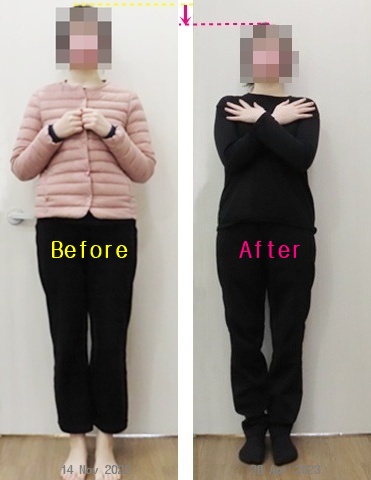
49. Frequently Asked Questions About Height Reduction Surgery
Q. Can surgery really make me shorter?
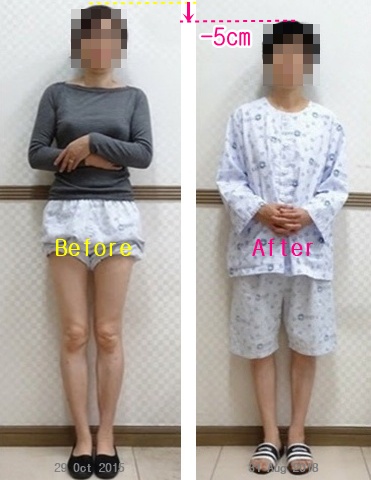
Yes. Shortening the long bones of the lower limbs can reduce standing height in skeletally mature patients.
Q. What is the medical name for height reduction surgery?
Depending on the operation, terms include limb shortening surgery, femoral shortening, tibial shortening, bone shortening osteotomy, and leg shortening surgery.
Q. Is height reduction the opposite of limb lengthening?
Conceptually, yes, but the surgical processes are different. Lengthening gradually increases bone length, while shortening removes a predetermined amount of existing bone.
Q. How many centimeters can I become shorter?
There is no universal number appropriate for every patient. The amount must be determined according to individual anatomy, proportions, muscle condition, joint function, and surgical risk.
Q. Can I choose exactly how many centimeters I want removed?
Your desired reduction is considered during planning, but the final amount should be based on what is medically and anatomically appropriate.
Q. Is femur shortening better than tibia shortening?
Yes. Femoral shortening surgery has a lower incidence of complications than tibial shortening surgery.
Q. Can both femurs be shortened?
Bilateral femoral shortening may be considered when the goal is overall height reduction in an appropriately selected patient.
Q. Can the tibias also be shortened?
Tibial shortening may be considered in selected cases after careful evaluation.
Q. Can both femur and tibia be shortened?
Staged multi-level shortening may be considered in selected circumstances, but it increases treatment complexity and cumulative risk.
Q. Will my proportions look normal?
This depends on the original proportions and amount of shortening. Standing height, sitting height, arm span, femur length, and tibia length should be considered during planning.
Q. Will my arms become too long?
The arms do not become longer, but arm span relative to standing height changes when the legs are shortened.
Q. Will I need physical therapy?
Rehabilitation is an important component of recovery after major limb shortening surgery.
Q. Will I need a wheelchair?
Mobility requirements depend on the procedure and weight-bearing restrictions. Some patients may temporarily require a walker, crutches, wheelchair, or a combination.
Q. When can I walk normally?
Normal walking depends on bone healing, muscle recovery, joint motion, and rehabilitation. There is no single timeline appropriate for every patient.
Q. How long does the bone take to heal?
Bone healing varies between individuals and should be assessed clinically and radiographically rather than by a fixed number of weeks.
Q. Can I return to sports?
Sports are gradually resumed after adequate bone healing, strength, joint motion, and functional recovery.
Q. Can height reduction cause muscle weakness?
Temporary weakness can occur because bone shortening changes muscle length and tension. Rehabilitation is important.
Q. Can height reduction affect the knees?
Any change in lower-limb anatomy may affect biomechanics. Preoperative alignment and joint condition should therefore be carefully evaluated.
Q. Can I have surgery if I have bow legs?
Patients with bow legs require full alignment evaluation. The treatment plan may need to consider both length and alignment.
Q. Can teenagers have height reduction surgery?
Skeletally immature patients require a different approach. In selected cases, growth modulation such as epiphysiodesis may be considered rather than adult-style bone shortening.
Q. Does epiphysiodesis make me shorter immediately?
No. It reduces future growth at selected growth plates rather than removing existing bone length.
Q. Is height reduction surgery reversible?
Bone shortening should be considered a permanent structural change. Restoring the original length would require a separate limb-lengthening procedure and should not be viewed as simple reversal.
50. Height Reduction Surgery in Seoul, South Korea
Gangnam Champion Hospital provides orthopedic evaluation for patients interested in:
✔ Height Reduction Surgery
✔ Limb Shortening Surgery
✔ Leg Shortening Surgery
✔ Femoral Shortening
✔ Femur Shortening Surgery
✔ Tibial Shortening
✔ Bone Shortening Osteotomy
✔ Limb-Length Correction
✔ Growth Plate Surgery
✔ Epiphysiodesis
✔ Associated Bow-Leg or Knock-Knee Deformity
✔ Selected Revision Limb Surgery
Treatment is individually planned according to the patient's anatomy, skeletal maturity, body proportions, lower-limb alignment, joint function, and treatment goals.
International Patients: Planning Surgery in Korea
International patients require additional planning because bone healing continues long after the operation.
Before traveling, patients should discuss:
✔ Preliminary medical review
✔ Expected length of stay in Korea
✔ Accommodation
✔ Mobility after discharge
✔ Physical therapy
✔ Follow-up imaging
✔ Flight timing
✔ Follow-up after returning home
✔ Communication with the surgical team
The required stay in Korea varies according to the procedure and recovery.
International Patient Consultation
International patients interested in height reduction surgery in Korea may contact Gangnam Champion Hospital before arranging travel.
For a preliminary assessment, please provide available medical information, standing photographs, height and body measurements, and lower-limb X-rays.
Preliminary Online Evaluation
International patients may request a preliminary review before traveling.
Useful information may include:
✔ Age, Sex
✔ Current standing height, weight
✔ Desired height
✔ Full-length standing photographs
✔ Front and side photographs
✔ Previous orthopedic surgery
✔ Previous limb lengthening
✔ Medical conditions
✔ Current medications
✔ Smoking history
This information can help determine what additional evaluation may be required.
A final surgical recommendation cannot be made without appropriate medical assessment.
Further imaging or examination may be requested before a treatment plan can be established.
Gangnam Champion Hospital
525 Ogeum-ro, Songpa-gu
Seoul, South Korea
T : +82-2-408-7575
E : drahn818@naver.com
◆: [ Consultation ]
Patients from overseas may contact the hospital for information regarding consultation, treatment scheduling, expected stay in Korea, and follow-up care.
This page provides general medical information and does not replace individual medical consultation. Height reduction and limb shortening are major orthopedic procedures. Surgical candidacy, achievable shortening, technique, recovery, risks, and outcomes vary according to each patient's anatomy and medical condition.
-축소 150.jpg)